
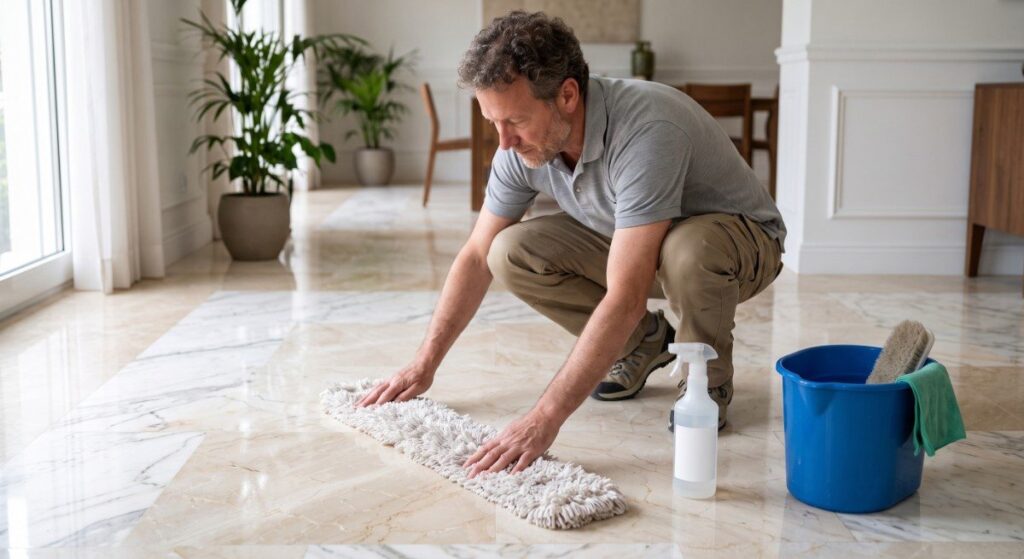
Italian marble is admired for its luxurious appearance, natural veining, smooth finish, and timeless elegance. Whether installed in a living room, hotel lobby, office, hallway, or luxury home, it can instantly make an interior look more sophisticated. However, this beautiful natural stone requires careful maintenance because incorrect cleaning products or aggressive techniques can cause dullness, scratches, etching, and permanent stains.
The good news is that maintaining Italian marble does not always require complicated methods. With the right products, cleaning techniques, and regular maintenance routine, you can preserve its shine and appearance for years. In this guide, Ultraclean explains practical ways to clean Italian marble floors safely while avoiding common mistakes that can damage the stone.
Why Does Italian Marble Need Special Care?
Marble is a natural stone primarily composed of calcium carbonate, which makes it vulnerable to acidic substances and abrasive cleaners. Everyday substances such as lemon juice, vinegar, coffee, soft drinks, and some bathroom cleaners can react with the marble surface.
Regular dirt and sand can also become a problem. When walked over repeatedly, small particles can act like abrasives and create fine scratches. This is why Italian marble floor cleaning should focus on removing dirt gently rather than using strong chemicals or excessive scrubbing.
Proper maintenance helps preserve:
- The natural shine of the marble
- Smooth surface texture
- Original color and veining
- Resistance to everyday staining
- Overall appearance and value of the flooring
How to Clean Italian Marble Floors Safely
A simple cleaning routine can prevent many common marble problems. Follow these steps for effective and safe maintenance.
Remove Dust and Loose Dirt
Start by removing loose dust, sand, and debris from the floor. Use a soft microfiber dust mop or a vacuum cleaner with a suitable soft floor attachment.
Avoid dragging hard objects or using rough brushes because they may leave small scratches on polished marble.
Daily dust removal is particularly useful in entrances, corridors, and high-traffic areas where abrasive particles accumulate quickly.
Use a pH-Neutral Cleaner
Choose a cleaner specifically designed for natural stone. A pH-neutral marble cleaner is generally safer than household cleaners containing acids, bleach, or strong chemicals.
Mix the cleaning solution according to the manufacturer’s instructions. Using too much cleaning solution does not necessarily produce better results and may leave a residue on the surface.
This approach is an important part of safe marble cleaning because it removes everyday dirt without unnecessarily affecting the stone.
Mop With a Soft Microfiber Mop
Use a clean microfiber mop to distribute the cleaning solution evenly across the floor. Do not soak the marble with excessive water.
Marble is not normally damaged by occasional moisture, but standing water can enter porous areas, grout joints, or existing cracks and contribute to staining or other problems.
For best results, work in manageable sections and rinse the mop frequently.
Dry the Surface Properly
After cleaning, use a clean, dry microfiber cloth or mop to remove remaining moisture. Allowing dirty water to dry naturally can leave streaks, marks, or mineral deposits.
Drying is especially important on dark or highly polished Italian marble because water marks may be more noticeable.
Cleaning Products You Should Avoid
One of the most important rules of Italian marble maintenance is knowing which products should never be used.
Avoid:
- Vinegar and lemon-based cleaners
- Strong acidic bathroom cleaners
- Abrasive powders
- Rough scouring pads
- Steel wool
- Unapproved bleach-based products
- Generic floor cleaners with harsh chemicals
- Highly alkaline cleaning solutions
Acidic substances can cause etching, which appears as dull or cloudy patches. Unlike ordinary dirt, etching is not simply removed through normal mopping.
If you are unsure whether a cleaning product is suitable, test it on an inconspicuous area or consult a stone-care professional before applying it to the entire floor.
How to Remove Common Marble Stains
Different stains may require different approaches. Trying to remove every stain with aggressive scrubbing can make the situation worse.
- Oil and Grease Stains: Oil-based stains may penetrate porous marble. Avoid rubbing aggressively. A professional stone-cleaning product or suitable poultice may be required for deeper stains.
- Coffee and Tea Stains: Blot spills immediately using a clean, absorbent cloth. Do not allow the liquid to remain on the surface for a long time.
- Water Marks: Light water marks may sometimes be removed with a soft microfiber cloth and appropriate stone cleaner. Persistent mineral deposits may require professional treatment.
- Ink and Colored Stains: Ink, dyes, and strongly colored substances can penetrate porous stone. Attempting to remove them with harsh chemicals may damage the surrounding marble.
Professional Italian marble stain removal is often a safer option when the stain is old, deep, or resistant to routine cleaning.
How Professional Marble Polishing Helps
Regular cleaning removes surface dirt, but it does not restore marble that has become scratched, etched, or dull. This is where professional polishing can make a significant difference.
How Professional Marble Polishing works depends on the condition of the stone. Professionals may use specialized diamond abrasives and polishing compounds to gradually refine the surface and restore a smoother, more reflective finish.
Professional polishing can help with:
- Light surface scratches
- Dull areas
- Minor etching
- Uneven shine
- Surface wear
- Loss of natural luster
How Professional Marble Polishing is performed should depend on the marble type, finish, thickness, and condition. Using the wrong abrasive or technique can create uneven results, so experienced technicians should handle restoration work.
For properties requiring regular Marble polishing in Riyadh, professional assessment can help determine whether the floor needs routine cleaning, polishing, honing, or another restoration treatment.
When Should You Hire Professional Cleaners?
DIY cleaning is suitable for routine maintenance, but some situations require specialist knowledge. Consider professional cleaning services when marble has deep stains, widespread dullness, scratches, etching, or uneven polishing.
Professional marble cleaning can also be useful for large properties where consistent results are difficult to achieve with household equipment.
A qualified marble care company Riyadh can inspect the stone, identify the cause of the problem, and recommend an appropriate treatment instead of applying potentially damaging chemicals.
Ultraclean provides specialized solutions designed to help property owners maintain attractive and hygienic natural stone surfaces.
Italian Marble Cleaning Services for Long-Term Protection
Professional Italian marble cleaning services are particularly valuable in commercial buildings, luxury residences, hotels, restaurants, and other high-traffic environments.
A professional team can use suitable equipment and stone-safe products to clean the surface while minimizing the risk of scratches or chemical damage.
Regular professional maintenance may include:
- Surface inspection
- Dust and debris removal
- Deep stone cleaning
- Stain treatment
- Polishing where required
- Surface protection recommendations
- Ongoing maintenance guidance
The goal is not simply to make the floor look clean for one day. Proper maintenance should help preserve its appearance and reduce the need for expensive restoration.
Italian Marble Maintenance Tips for Everyday Use
Small daily habits can make a major difference to marble floors.
Place high-quality mats near entrances to reduce the amount of sand and dirt brought indoors. Clean spills immediately rather than allowing liquids to sit on the stone. Use furniture pads under chairs, tables, and other movable items.
You should also avoid placing sharp or heavy objects directly on polished marble surfaces.
For high-traffic properties, establish a regular maintenance schedule rather than waiting until the floor becomes visibly dirty or dull.
Is Marble Cleaning the Same as Granite Cleaning?
No. Although both are natural stones, their chemical composition and maintenance requirements are different.
Marble is particularly sensitive to acids, while granite is generally more resistant to acidic substances. Therefore, a product suitable for one stone should not automatically be assumed to be appropriate for another.
A granite polishing company may use different methods and products from those used for marble restoration. Always identify the stone correctly before choosing a cleaning or polishing process.
Why Choose Ultraclean for Marble Care?
At Ultraclean, we understand that natural stone requires more than ordinary floor cleaning. Italian marble needs careful handling, appropriate products, and suitable techniques to maintain its elegance without causing unnecessary surface damage.
Our professional cleaning services are designed to address everyday dirt as well as more demanding marble-care requirements. From deep cleaning to polishing and stain treatment, our approach focuses on the condition and needs of the stone.
For homeowners and businesses looking for professional marble cleaning in Riyadh, choosing an experienced service provider can help protect the appearance of valuable marble surfaces and support long-term Italian marble maintenance.
Final Thoughts
Italian marble can remain beautiful for many years when it receives the right care. The most important principles are simple: remove dust regularly, clean spills quickly, use pH-neutral stone-safe products, avoid acidic and abrasive cleaners, and never scrub aggressively.
Routine maintenance can keep everyday dirt under control, while professional treatment can address stains, etching, scratches, and dullness that ordinary cleaning cannot solve. With the right care strategy and support from experienced professionals such as Ultraclean, your marble floors can continue to provide the elegant finish that makes Italian stone so desirable.
Frequently Asked Questions
Can I use vinegar to clean Italian marble floors?
No. Vinegar is acidic and can etch marble surfaces, causing dull spots. Always choose a pH-neutral cleaner specifically formulated for natural stone to protect the finish.
How often should Italian marble floors be cleaned?
Italian marble floors should be dusted regularly and damp-cleaned as needed. High-traffic areas may require frequent cleaning, while professional maintenance can be scheduled periodically.
How can I remove stains from Italian marble?
Blot spills immediately and avoid abrasive scrubbing. For stubborn or deep stains, professional treatment is recommended because unsuitable chemicals can worsen discoloration or permanently damage marble.
Is professional marble polishing necessary for Italian marble?
Professional polishing is not required after every cleaning. However, it can restore dull, lightly scratched, or etched surfaces when routine cleaning no longer provides the desired appearance.
Can Italian marble be cleaned with normal floor cleaner?
Not always. Many household floor cleaners contain chemicals unsuitable for marble. Use a pH-neutral, stone-safe cleaner or consult professionals before applying unfamiliar products to marble.
Why choose professional Italian marble cleaning services?
Professional Italian marble cleaning services use appropriate equipment, stone-safe products, and specialized techniques. They can safely address stains, dullness, and surface wear while helping preserve marble’s appearance.