
A clean sofa can instantly make a room feel fresher, healthier, and more inviting. But even when your upholstery looks spotless, everyday use can leave behind dust, body oils, food crumbs, pet hair, spills, and odours. Waiting for the next professional cleaning without any maintenance can allow these contaminants to settle deeper into the fabric or leather.
That is why understanding Upholstery Between Professional Cleanings is important for homeowners and businesses that want their furniture to stay comfortable and attractive for longer. Simple habits such as regular vacuuming, immediate spill treatment, proper ventilation, and careful product selection can make a noticeable difference.
For households and workplaces in Riyadh, where dust and dry conditions can contribute to faster accumulation of airborne particles, consistent upholstery maintenance is particularly valuable. With the right routine and professional support from Ultraclean, furniture can remain cleaner, fresher, and better protected between deep-cleaning appointments.
Why Upholstery Needs Regular Care
Sofas, armchairs, dining chairs, office seating, and other upholstered furniture are exposed to daily contact. Dust settles on surfaces, while skin oils, perspiration, food particles, and airborne pollutants can gradually build up.
Without regular attention, these contaminants may affect the appearance and odour of upholstery. They can also contribute to premature wear, particularly when fine particles become trapped between fibres and are repeatedly rubbed into the material.
A practical upholstery cleaning routine helps reduce this accumulation. It does not replace professional cleaning, but it can keep furniture in better condition until the next deep-cleaning service.
Vacuum Upholstery Regularly
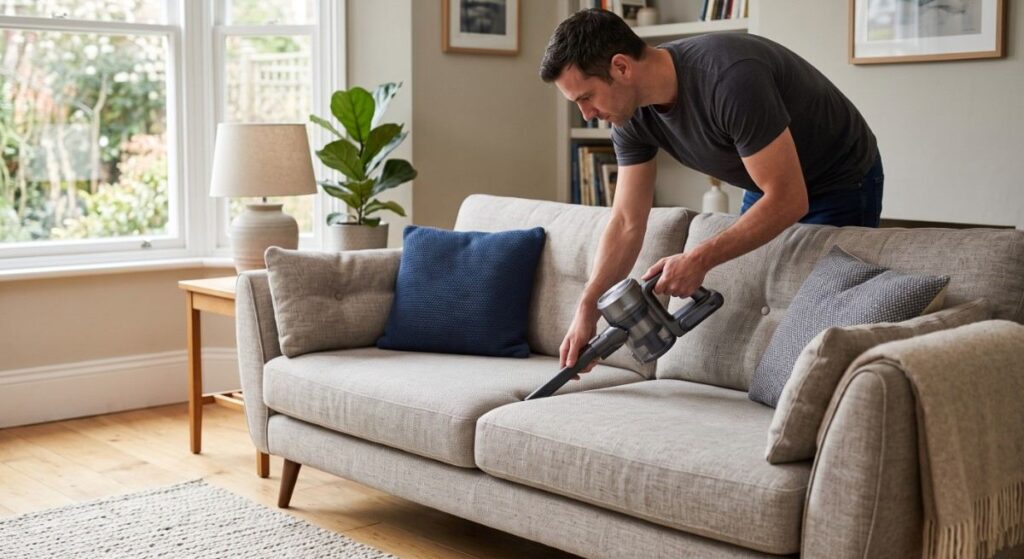
One of the simplest upholstery care tips is regular vacuuming. Use a vacuum cleaner with an upholstery attachment to remove loose dust, crumbs, hair, and other particles.
Pay special attention to:
- Seat cushions and their edges
- Gaps between cushions
- Armrests
- Backrests
- Seams and piping
- Areas underneath removable cushions
For frequently used furniture, weekly vacuuming is a practical starting point. Homes with children, pets, or high foot traffic may benefit from more frequent cleaning.
Avoid pressing the vacuum head too aggressively against delicate materials. Excessive pressure can potentially affect fibres, stitching, or surface finishes.
Deal With Spills Immediately
A small spill can become a difficult stain if it is ignored. The faster you respond, the better the chance of preventing the liquid from penetrating deeply into the upholstery.
Start by gently blotting the affected area with a clean, absorbent cloth. Work from the outside toward the centre to help prevent spreading.
Do not aggressively rub the stain. Rubbing can push the substance deeper into fibres and may damage delicate surfaces.
Before applying any cleaning product, check the manufacturer’s care instructions. Different fabrics and finishes require different approaches, and an unsuitable chemical may cause discolouration or damage.
Avoid Excessive Moisture
Another important part of Upholstery Between Professional Cleanings is controlling moisture. Upholstered furniture should not be unnecessarily saturated during routine maintenance.
Excess moisture can take a long time to evaporate, especially when ventilation is poor. If moisture remains trapped inside cushions or padding, it can contribute to unpleasant smells and other problems.
When spot-cleaning, use only the amount of moisture recommended for the specific upholstery material. After cleaning, provide adequate airflow so the area can dry properly.
In Riyadh’s climate, using appropriate ventilation and air conditioning can help maintain a comfortable indoor environment while upholstery dries.
Protect Upholstery From Direct Sunlight
Sunlight can gradually affect some upholstery materials, particularly fabrics with strong or dark colours. Prolonged exposure may contribute to fading or changes in appearance.
If possible, position sofas and chairs away from intense direct sunlight. Curtains, blinds, or window films can also help reduce prolonged exposure.
Rotating removable cushions periodically can sometimes help distribute everyday wear more evenly. Always follow the manufacturer’s instructions before changing cushion positions.
Learn the Difference Between Leather and Fabric
Understanding Leather vs. Fabric Upholstery is essential because each material has different maintenance requirements.
Fabric upholstery generally benefits from regular vacuuming and careful spot treatment. However, fabrics vary considerably in their construction, colourfastness, and cleaning requirements.
Leather usually requires gentle dust removal and products specifically designed for leather. Harsh household cleaners can potentially dry out or damage the surface.
Before using any product, identify the upholstery material and review its manufacturer’s care recommendations. If you are uncertain, professional advice is safer than experimenting with unfamiliar chemicals.
Keep Food and Drinks Away When Possible
Food and beverages are common sources of upholstery stains. Crumbs can fall into seams, while drinks can quickly penetrate fabric or padding.
Creating a simple household rule – such as using dining areas for meals rather than sofas – can reduce accidental spills.
If eating on the sofa is unavoidable, use trays or protective covers when appropriate. These small habits can support long-term upholstery maintenance.
Use Upholstery-Safe Products
Not every household cleaning product is suitable for furniture. Bleach, strong detergents, solvents, or unsuitable disinfectants can affect colours, fibres, coatings, and finishes.
Always check the product label and upholstery manufacturer’s instructions. If a product is approved for your material, test it on a small, hidden area first.
One of the most useful upholstery cleaning tips is to avoid mixing cleaning chemicals. Combining products can create unexpected reactions and may damage the upholstery or create harmful fumes.
Reduce Dust Inside the Home
Upholstery does not exist in isolation. The cleaner your indoor environment is, the less airborne dust is likely to settle on furniture.
Regularly clean floors, curtains, rugs, shelves, and other dust-collecting surfaces. Maintain air-conditioning systems according to manufacturer recommendations and keep rooms adequately ventilated.
For Riyadh homes and businesses, controlling indoor dust can be particularly helpful because outdoor dust can enter through doors, windows, and ventilation systems.
Consider the Health Benefits
Furniture can collect dust, allergens, pet particles, and other contaminants over time. Regular care helps reduce the amount of accumulated debris on surfaces.
The Health Benefits of Sofa and Upholstery Cleaning include supporting a cleaner indoor environment, reducing accumulated dust, and improving overall freshness. However, routine home care should complement rather than replace professional deep cleaning.
People who spend many hours on sofas or upholstered office furniture can benefit from maintaining these surfaces as part of a broader indoor cleanliness routine.
How Often Should Upholstery Be Professionally Cleaned?
The ideal professional cleaning frequency depends on several factors, including usage, upholstery type, household size, pets, children, and indoor environmental conditions.
Furniture in a lightly used guest room may require less frequent professional attention than a sofa used every day by a large family.
Between professional appointments, continue vacuuming and addressing spills promptly. When upholstery begins to show persistent staining, unpleasant odours, visible dirt, or heavy wear, professional cleaning may be appropriate.
A professional service can also help identify material-specific cleaning requirements that are difficult to manage with ordinary household methods.
When to Choose Professional Upholstery Cleaning
Some upholstery problems should not be handled with trial-and-error cleaning. Persistent stains, deep-set dirt, strong odours, delicate fabrics, and heavily soiled furniture may require specialist equipment and professional techniques.
A reputable Upholstery Cleaning Company Riyadh can assess the material and select a suitable cleaning approach.
Professional cleaners can use specialised equipment designed to extract accumulated dirt more effectively than ordinary household cleaning. This is particularly useful for high-use sofas and furniture that cannot be thoroughly cleaned using simple surface maintenance.
For businesses, professional services can also help maintain a cleaner appearance for customers, employees, and visitors. Commercial Sofa cleaning services Riyadh can be particularly useful for offices, hotels, waiting areas, restaurants, and other high-traffic environments.
Creating a Simple Upholstery Maintenance Schedule
Knowing how to maintain upholstery becomes easier when care is turned into a routine.
A practical schedule could include:
- Weekly: Vacuum sofas, chairs, cushions, seams, and hard-to-reach areas.
- As needed: Blot spills immediately and follow the manufacturer’s cleaning instructions.
- Monthly: Inspect furniture for stains, odours, loose threads, and signs of excessive wear.
- Periodically: Rotate cushions where appropriate and review whether professional cleaning is due.
After professional cleaning: Follow drying and aftercare recommendations to preserve the results.
This approach makes Upholstery Between Professional Cleanings much more manageable and reduces the chance of small problems becoming larger ones.
Why Choose Ultraclean?
Keeping upholstery clean between professional appointments requires consistency, but professional expertise remains important for deeper cleaning. Ultraclean – Professional Cleaning Company Riyadh provides professional cleaning solutions designed to help homes and businesses maintain cleaner, fresher interiors.
For workplaces and commercial properties, commercial Sofa cleaning services Riyadh can help maintain presentable seating in areas that experience frequent daily use.
With the right combination of regular home or workplace care and professional cleaning, furniture can retain its appearance and comfort for longer.
Final Thoughts
Good upholstery care does not have to be complicated. Regular vacuuming, immediate spill treatment, careful use of suitable products, protection from excessive sunlight, and proper ventilation can all make a meaningful difference.
Most importantly, remember that routine maintenance and professional cleaning serve different purposes. Everyday care controls surface dirt and prevents avoidable buildup, while professional cleaning addresses deeper contamination and difficult stains.
By following these practical steps for Upholstery Between Professional Cleanings, you can help protect your furniture, improve its appearance, and create a cleaner indoor environment. When deeper cleaning is required, choosing an experienced professional such as Ultraclean can provide the specialist care your upholstery needs.
Frequently Asked Questions
How often should I vacuum upholstered furniture?
Vacuum upholstered furniture weekly to remove dust, crumbs, hair, and surface debris. High-use sofas, homes with pets, and busy offices may require more frequent vacuuming.
How should I handle a fresh upholstery spill?
Blot fresh spills immediately with a clean absorbent cloth. Avoid vigorous rubbing, because friction can spread the stain and push liquid deeper into upholstery fibres.
Can I use household cleaners on upholstery?
Avoid using household cleaners unless they are specifically suitable for your upholstery material. Always follow manufacturer instructions and test products on an inconspicuous area.
Is leather easier to maintain than fabric upholstery?
Leather can be easier to wipe clean, but it requires suitable leather-care products. Fabric varies by material, so cleaning requirements depend on construction and manufacturer recommendations.
When should upholstery receive professional cleaning?
Professional cleaning is recommended when upholstery develops persistent stains, noticeable odours, heavy soil, or requires deeper cleaning that regular household maintenance cannot effectively provide.
Why is regular upholstery cleaning important?
Regular upholstery cleaning helps remove accumulated dust, allergens, stains, and odours while supporting furniture appearance and indoor freshness. Routine care also helps maintain upholstery between professional cleaning appointments.