
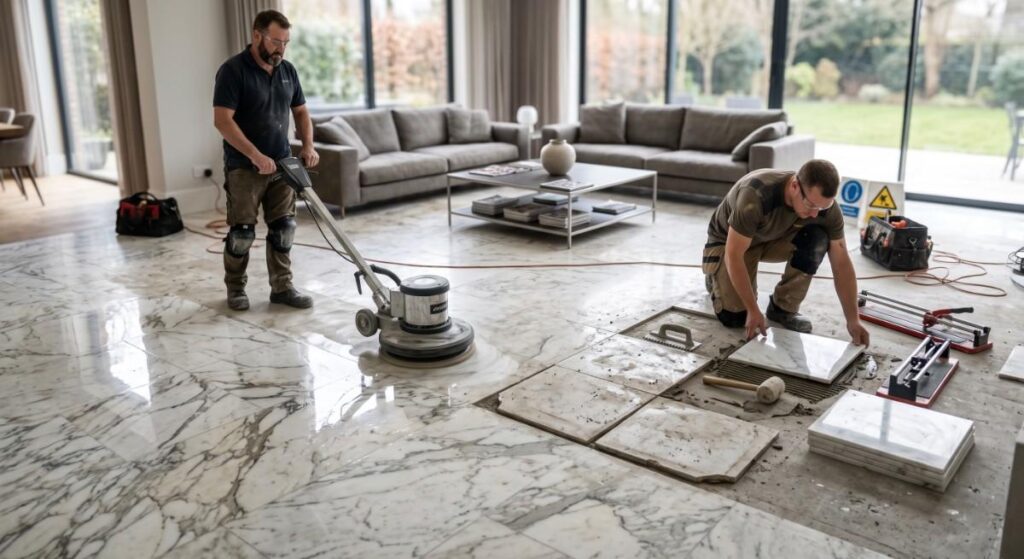
A beautiful marble floor can instantly make a home, hotel, office, or commercial property look elegant and luxurious. But over time, even premium marble can lose its shine. Scratches, stains, dull patches, etching, foot traffic, and accumulated dirt can make a once-glossy floor look tired. When this happens, property owners often face an important question: should they restore the existing surface or install new marble?
Understanding marble polishing vs replacement can help you make a practical decision based on your floor’s condition, budget, appearance, and long-term needs. While replacement may seem like the easiest way to achieve a completely new appearance, professional restoration can often deliver impressive results without the disruption and expense of removing the existing floor.
At Ultraclean, we help property owners understand their flooring needs and choose appropriate cleaning and restoration solutions. Here is what you should know before deciding between polishing and replacement.
What Is Marble Polishing?
Marble polishing is a professional process designed to restore the smoothness, clarity, and shine of an existing marble surface. Depending on the floor’s condition, technicians may use diamond abrasives, grinding equipment, polishing compounds, and specialized treatments to improve its appearance.
Unlike basic cleaning, professional marble floor polishing addresses surface imperfections that ordinary cleaning cannot remove. Light scratches, dull areas, minor stains, and surface wear can often be improved through carefully selected restoration techniques.
Professional marble polishing can also enhance the natural patterns and colors of marble, making an older floor look significantly fresher without replacing the stone.
What Is Marble Replacement?
Marble replacement involves removing existing marble tiles or slabs and installing new material. It may be necessary when the flooring has severe structural damage, extensive cracking, loose sections, or problems that cannot be economically restored.
Replacement provides an opportunity to change the color, pattern, size, or style of the flooring. However, it can involve demolition, disposal, material purchases, preparation, installation, and finishing.
Before choosing marble replacement, it is important to determine whether the existing marble is actually beyond restoration. In many cases, a floor that looks badly damaged may only require professional treatment.
Marble Polishing vs Replacement: Key Differences
When comparing marble polishing vs replacement, consider several important factors.
Condition of the Marble
The condition of the floor should be the first consideration. Surface dullness, minor scratches, stains, and light etching may be suitable for restoration.
However, severely cracked slabs, major structural damage, extensive tile movement, or deeply damaged marble may make replacement more appropriate.
A professional inspection can help identify whether the problem is cosmetic or structural.
Cost
The cost of marble polishing is generally influenced by floor size, marble condition, required restoration steps, accessibility, and the level of finish required. Because the existing material remains in place, restoration can often be less expensive than purchasing and installing an entirely new floor.
Replacement usually includes the cost of new marble, removal of existing material, transportation, preparation, installation, grouting, and finishing. These additional expenses can make replacement a significantly larger project.
Time and Disruption
Polishing generally creates less disruption because the existing flooring does not need to be removed. Professional technicians can work through a planned process to restore the surface.
Replacement can take considerably longer because old flooring must be removed and the underlying surface prepared before new marble is installed.
For occupied homes, offices, hotels, and commercial properties, minimizing disruption can be a major advantage of restoration.
Appearance
If the marble has good structural integrity, restoration can dramatically improve its appearance. Professional technicians can reduce visible scratches, dullness, and surface imperfections while bringing back a polished finish.
New marble naturally provides a completely new appearance, but it also changes the character of the space. If you already like the existing marble’s color and pattern, restoration may be a more suitable option.
Marble Polishing vs Marble Cleaning: What Is the Difference?
Marble Polishing vs Marble Cleaning is an important distinction because these services address different problems. Cleaning primarily removes dirt, dust, spills, grime, and surface contaminants.
Polishing goes further by refining the marble surface and restoring its shine. If your floor is clean but still looks dull, ordinary Marble Cleaning may not solve the problem.
This is why professional assessment matters. A floor may need cleaning first and polishing afterward to achieve the desired finish.
Similarly, Marble Polishing vs Marble Cleaning should not be treated as interchangeable services. Cleaning maintains the surface, while polishing can correct certain forms of surface wear and restore visual clarity.
How Professional Marble Polishing Can Transform a Floor
Many property owners wonder, How Professional Marble Polishing can make such a noticeable difference to an older floor. The answer lies in the combination of specialized equipment, abrasive technology, skilled techniques, and appropriate finishing products.
A professional process may involve inspection, deep cleaning, grinding where necessary, honing, polishing, and sealing. The exact procedure depends on the marble type and the level of damage.
How Professional Marble Polishing works also depends on identifying the correct treatment for each problem. Excessive grinding or unsuitable products can damage delicate stone, so professional expertise is important.
For larger properties, a reliable grinding polishing service Riyadh can provide specialized equipment and experienced technicians for more demanding restoration projects. Choosing trained professionals can help achieve a consistent finish across large floor areas.
When Is Marble Polishing Better Than Replacement?
The question of whether marble polishing better than replacement depends primarily on the condition of the existing floor.
Polishing is often a better choice when:
- The marble is structurally sound.
- The main issue is dullness or surface wear.
- Scratches are relatively shallow.
- The existing marble has an attractive design.
- You want to reduce project costs.
- You want less disruption.
- You want to extend the usable life of the floor.
In these situations, marble polishing better than replacement may be a practical approach because restoration can improve the existing surface without requiring complete removal.
Replacement may be preferable when marble is extensively cracked, broken, unstable, severely damaged, or unsuitable for the property’s current design.
The Role of Marble Restoration
Marble restoration is broader than polishing alone. Depending on the condition of the floor, restoration may include cleaning, stain treatment, grinding, honing, polishing, crack repair, and sealing.
A complete marble floor restoration plan should begin with an assessment of the stone. This helps determine which treatments are necessary and prevents unnecessary work.
For homeowners and businesses seeking marble floor cleaning services Riyadh, choosing a company that understands both cleaning and restoration can make the process easier. Professional technicians can determine whether the floor needs routine maintenance or a deeper restoration treatment.
A specialist marble care company Riyadh can also provide recommendations for ongoing maintenance after restoration. Regular care is essential for preserving the finish and reducing future damage.
What Does Professional Marble Restoration Involve?
A typical marble floor restoration project may follow several stages:
- Inspection: Technicians assess scratches, stains, cracks, dull areas, and other visible problems.
- Cleaning: Dirt, grime, residues, and contaminants are removed from the surface.
- Grinding: Where necessary, damaged or uneven surface layers may be carefully removed using professional diamond abrasives.
- Honing: The surface is refined to create a smooth and uniform appearance.
- Polishing: Specialized equipment and polishing compounds are used to develop the desired level of shine.
- Sealing: Depending on the marble and application, a suitable sealer may help provide additional protection against staining.
This approach can restore an existing floor while maintaining its original character.
How to Decide Between Polishing and Replacement
When evaluating marble polishing vs replacement, ask yourself five questions:
- Is the marble structurally sound?
- Are the problems mainly cosmetic?
- Do you like the existing marble design?
- Would replacement create unnecessary disruption?
- Is restoration financially more practical?
If the answer to most of these questions favors restoration, polishing may be the logical choice.
You should also consider the property’s purpose. A luxury hotel lobby, busy office, villa, restaurant, or retail space may have different flooring requirements. Professional advice can help match the treatment to expected foot traffic and maintenance needs.
How to Maintain Marble After Polishing
Once your floor has been professionally restored, regular maintenance can help preserve its appearance.
Use pH-neutral cleaning products recommended for natural stone. Avoid harsh acidic cleaners because they can etch marble. Wipe spills quickly, especially acidic liquids such as citrus-based drinks.
Use entrance mats to reduce sand and grit entering the property. Furniture pads can also help reduce scratching when heavy furniture is moved.
Regular professional Marble Cleaning can remove accumulated dirt before it contributes to a worn appearance. Periodic polishing may also help maintain the finish, depending on traffic levels.
A qualified marble care company Riyadh can recommend a maintenance schedule based on your property’s usage and flooring condition.
Is Polishing Always Cheaper Than Replacement?
Not necessarily. The answer depends on the size and condition of the floor and the amount of restoration required.
A heavily damaged floor may require extensive grinding, repairs, and multiple restoration stages. In some cases, replacement could become more practical.
However, if the marble is fundamentally sound and only suffers from surface-level problems, restoration can offer substantial value. Getting a professional assessment and quotation is the best way to compare the options accurately.
Final Thoughts
Choosing between restoration and new flooring does not have to be complicated. The right decision depends on the marble’s structural condition, appearance, maintenance history, budget, and your long-term expectations.
For many floors, professional restoration can bring back the original beauty without the cost, waste, and disruption associated with replacement. Understanding marble polishing vs replacement allows property owners to evaluate the actual condition of their flooring instead of automatically assuming that damaged-looking marble must be removed.
If you are unsure whether your floor needs polishing, restoration, or replacement, Ultraclean can help you assess the condition and identify a suitable solution. Professional marble floor polishing and restoration can be an effective way to protect your investment and keep your marble looking elegant for years to come.
Frequently Asked Questions
Is marble polishing better than replacing a floor?
Yes, when marble is structurally sound and mainly has scratches, dullness, stains, or surface wear. Polishing can restore its appearance while avoiding demolition, replacement costs, and unnecessary disruption.
How often should marble floors be professionally polished?
Professional polishing frequency depends on traffic, marble type, usage, and maintenance. Residential floors may need occasional treatment, while busy commercial areas can require more frequent professional restoration and maintenance.
What is the difference between marble cleaning and polishing?
Marble cleaning removes dirt, dust, spills, and surface contaminants, while polishing refines the stone surface and restores shine. Cleaning maintains appearance; polishing addresses certain surface imperfections and dullness.
How much does professional marble polishing cost?
The cost depends on floor size, marble condition, required restoration stages, accessibility, and finish. A professional inspection and quotation provide the most accurate estimate for your specific flooring.
When should marble be replaced instead of polished?
Replacement is generally considered when marble has severe structural cracks, extensive breakage, unstable sections, major deterioration, or damage that cannot be economically corrected through professional restoration and repair.
Can professional polishing restore old marble floors?
Yes, professional restoration can significantly improve many older marble floors by addressing dullness, scratches, stains, and uneven surfaces. Results depend on marble condition, damage depth, stone type, and treatment quality.