
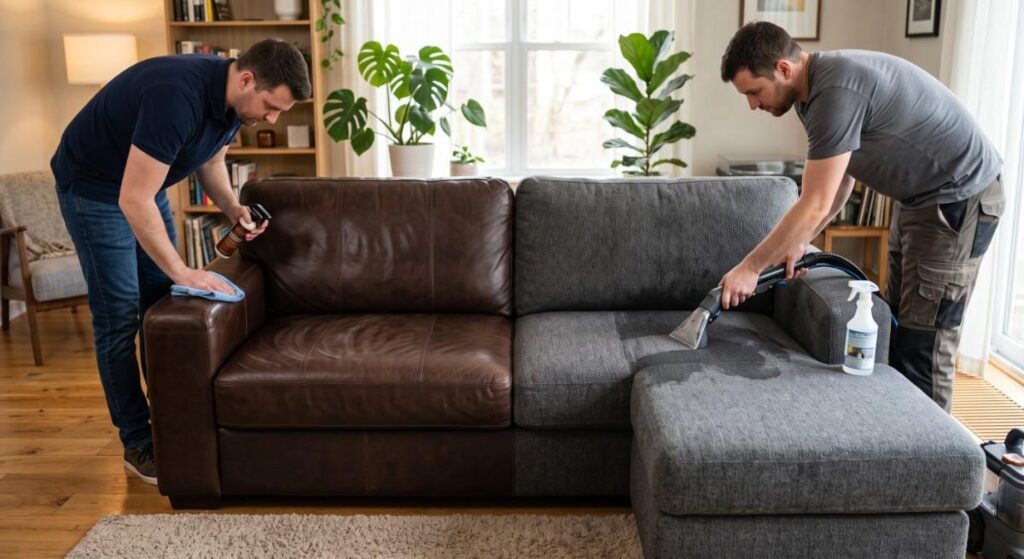
Choosing the right upholstery for your home or office is more than just a design decision. It affects comfort, durability, maintenance, and long-term cleanliness. Whether you own a luxurious leather sofa or a cozy fabric couch, understanding the proper cleaning methods can significantly extend its lifespan while maintaining its appearance.
At Ultraclean, we understand that every upholstery material requires specialized care. Many homeowners struggle to decide between leather and fabric furniture, especially when considering cleaning requirements. This guide explains the key differences, the best maintenance techniques, and professional cleaning recommendations to help you keep your furniture in excellent condition.
If you’re comparing Leather vs. Fabric Upholstery, this detailed guide will help you make informed decisions while ensuring your furniture remains clean, hygienic, and attractive for years.
Understanding Leather vs. Fabric Upholstery
When discussing Leather vs. Fabric Upholstery, it’s important to recognize that both materials offer unique advantages and require different maintenance approaches.
Leather upholstery is made from treated animal hides and is valued for its luxurious appearance and durability. Fabric upholstery, on the other hand, is available in countless textures, patterns, and colors, making it a versatile choice for various interior styles.
The cleaning methods differ because leather is a non-porous material, while fabric absorbs moisture, dust, and stains more easily.
Leather Upholstery: Cleaning and Maintenance
Leather furniture adds elegance to any living space but requires careful maintenance to preserve its natural finish.
- Daily Cleaning: Use a soft microfiber cloth to remove dust regularly. Avoid rough fabrics that may scratch the surface.
- Weekly Care: Vacuum creases and corners using a soft brush attachment to remove dirt hidden between cushions.
- Monthly Conditioning: Leather loses moisture over time. Applying a quality leather conditioner every few months helps prevent cracking and fading.
- Spill Management: Blot spills immediately using a dry cloth. Never rub liquids into leather, as this may damage the protective coating.
These simple practices help maximize the leather sofa benefits, including durability, easy maintenance, and long-lasting beauty. Proper care also enhances the leather sofa benefits by preventing premature aging.
Fabric Upholstery: Cleaning and Maintenance
Fabric sofas create a warm and inviting atmosphere but require more frequent cleaning due to their absorbent nature.
- Vacuum Frequently: Dust, pet hair, and allergens settle deep into fibers. Weekly vacuuming helps maintain cleanliness.
- Spot Cleaning: Use upholstery-safe cleaning products according to the manufacturer’s recommendations.
- Deep Cleaning: Professional steam cleaning removes embedded dirt, bacteria, and allergens that household cleaning cannot eliminate.
Regular maintenance preserves the appearance while maximizing the fabric sofa benefits, including comfort and a wide variety of style options. Proper cleaning also protects the fabric sofa benefits by preventing discoloration and fiber damage.
Leather vs Fabric Sofa: Which Is Easier to Clean?
One of the most common questions homeowners ask is about leather vs fabric sofa maintenance.
Leather is generally easier to wipe clean after spills because liquids remain on the surface. Fabric absorbs spills quickly, making prompt action essential.
However, leather requires conditioning and protection from heat and sunlight, while fabric benefits from regular deep cleaning to remove embedded dirt.
When comparing leather vs fabric sofa, the better choice depends on your lifestyle, pets, children, and maintenance preferences.
Fabric vs Leather Furniture: Durability Comparison
When evaluating fabric vs leather furniture, durability depends largely on maintenance.
Leather often lasts longer when properly conditioned and protected. It resists stains better but may scratch from sharp objects.
Fabric furniture offers exceptional comfort but can experience fading, staining, and wear without routine cleaning.
Many modern performance fabrics now offer improved stain resistance, narrowing the durability gap between fabric vs leather furniture choices.
Common Dirt and Stains on Upholstery
Regardless of the material, upholstery commonly collects:
- Dust
- Food crumbs
- Beverage stains
- Pet hair
- Body oils
- Sweat
- Ink marks
- Children’s spills
- Allergens
- Bacteria
These contaminants not only affect appearance but also indoor air quality.
Hygiene Benefits of Sofa and Upholstery Cleaning
Many people overlook the Hygiene Benefits of Sofa and Upholstery Cleaning.
Professional upholstery cleaning removes:
- Dust mites
- Allergens
- Mold spores
- Pet dander
- Bacteria
- Deep-seated dirt
The Hygiene Benefits of Sofa and Upholstery Cleaning include healthier indoor air, reduced allergy symptoms, fresher furniture, and improved home hygiene.
How to Remove Tough Stains from Sofa
Learning How to Remove Tough Stains from Sofa correctly prevents permanent damage.
- Coffee: Blot immediately with a clean towel before applying upholstery cleaner.
- Ink: Avoid rubbing. Use a manufacturer-approved stain remover.
- Grease: Sprinkle baking soda to absorb oil before vacuuming.
- Pet Accidents: Use enzyme cleaners designed specifically for upholstery.
- Wine: Blot with a dry cloth and clean using appropriate upholstery-safe products.
If stains remain, professional technicians know How to Remove Tough Stains from Sofa safely without damaging delicate materials.
Why Professional Upholstery Cleaning Matters
DIY cleaning often removes only surface dirt.
Professional cleaning offers:
- Deep extraction
- Safe stain removal
- Fabric protection
- Leather conditioning
- Odor elimination
- Bacteria removal
- Longer furniture lifespan
- Improved indoor hygiene
Professional technicians also identify the correct cleaning solution based on different sofa upholstery materials, preventing accidental damage.
Understanding various sofa upholstery materials allows experts to apply specialized cleaning techniques for optimal results.
When Should Upholstery Be Professionally Cleaned?
Experts recommend professional cleaning:
- Every 6–12 months
- After major spills
- Following renovations
- Before festive seasons
- After illness in the household
- If pets frequently use furniture
Regular maintenance keeps upholstery looking newer while protecting your investment.
Choosing the Right Upholstery Cleaning Partner
When selecting an Upholstery Cleaning Company Riyadh, consider:
- Experienced technicians
- Eco-friendly products
- Advanced equipment
- Positive customer reviews
- Transparent pricing
- Safe cleaning methods
A trusted Upholstery Cleaning Company Riyadh ensures your furniture receives proper treatment without risking damage.
Complete Home Cleaning Solutions
Furniture cleaning works best alongside comprehensive home cleaning.
Professional General Cleaning Services Riyadh remove dust and contaminants from floors, carpets, curtains, and living spaces, creating a healthier environment.
Combining upholstery cleaning with General Cleaning Services Riyadh helps maintain a consistently clean and hygienic home.
Why Choose Ultraclean?
At Ultraclean, we provide professional upholstery cleaning solutions designed for both leather and fabric furniture. Our experienced technicians use industry-approved cleaning methods, eco-friendly products, and advanced equipment to remove stains, eliminate bacteria, and restore your furniture’s original beauty while protecting every type of upholstery.
Conclusion
Choosing between Leather vs. Fabric Upholstery depends on your lifestyle, maintenance preferences, and comfort needs. Leather offers elegance, durability, and easier spill cleanup, while fabric provides warmth, style variety, and exceptional comfort.
Understanding the proper cleaning methods for each material ensures your furniture remains attractive and hygienic for years. Regular professional cleaning helps remove deep-seated dirt, allergens, and bacteria while protecting your investment.
Whether your home features premium leather seating or comfortable fabric sofas, Ultraclean delivers expert upholstery cleaning solutions tailored to every material. With professional care, your furniture will continue to look beautiful, stay hygienic, and provide lasting comfort.
Frequently Asked Questions
Which is easier to clean, leather or fabric upholstery?
Leather upholstery is generally easier to clean because spills remain on the surface. Fabric absorbs liquids quickly and usually requires deeper cleaning to remove stains and trapped dirt effectively.
How often should upholstery be professionally cleaned?
Professional upholstery cleaning is recommended every six to twelve months. Homes with children, pets, or allergy sufferers may benefit from more frequent cleaning for better hygiene and furniture longevity.
Can professional cleaning remove old sofa stains?
Yes, professional cleaners use specialized equipment and safe cleaning solutions to remove many stubborn stains. Success depends on stain type, upholstery material, and how long the stain has remained.
Is leather conditioning necessary after cleaning?
Yes. Leather conditioning restores moisture, prevents cracking, maintains flexibility, and preserves the furniture’s appearance after cleaning, helping extend its lifespan and maintain its luxurious finish for years.
Why is upholstery cleaning important for home hygiene?
Regular upholstery cleaning removes allergens, bacteria, dust mites, pet dander, and deep-seated dirt, improving indoor air quality while creating a healthier and more comfortable living environment for families.
Why choose Ultraclean for upholstery cleaning in Riyadh?
Ultraclean provides experienced technicians, advanced cleaning equipment, eco-friendly products, and customized cleaning methods for leather and fabric furniture, ensuring outstanding cleaning results while protecting every upholstery material.